Often associated with Japan, cherry trees and their annual crowd-beckoning blossoms can be found the world over. There are species native to much of the northern hemisphere, as far afield as Europe and North America, and even more when including the Prunus genus relative plum trees, Prunus mume, which bear darker and redder blossoms. Beyond native species, the cultivated variations that have enhanced the ornamental features of the short-lived blossoms or adjusted their blooming cycles have found even greater global audiences through gifts and exchanges.
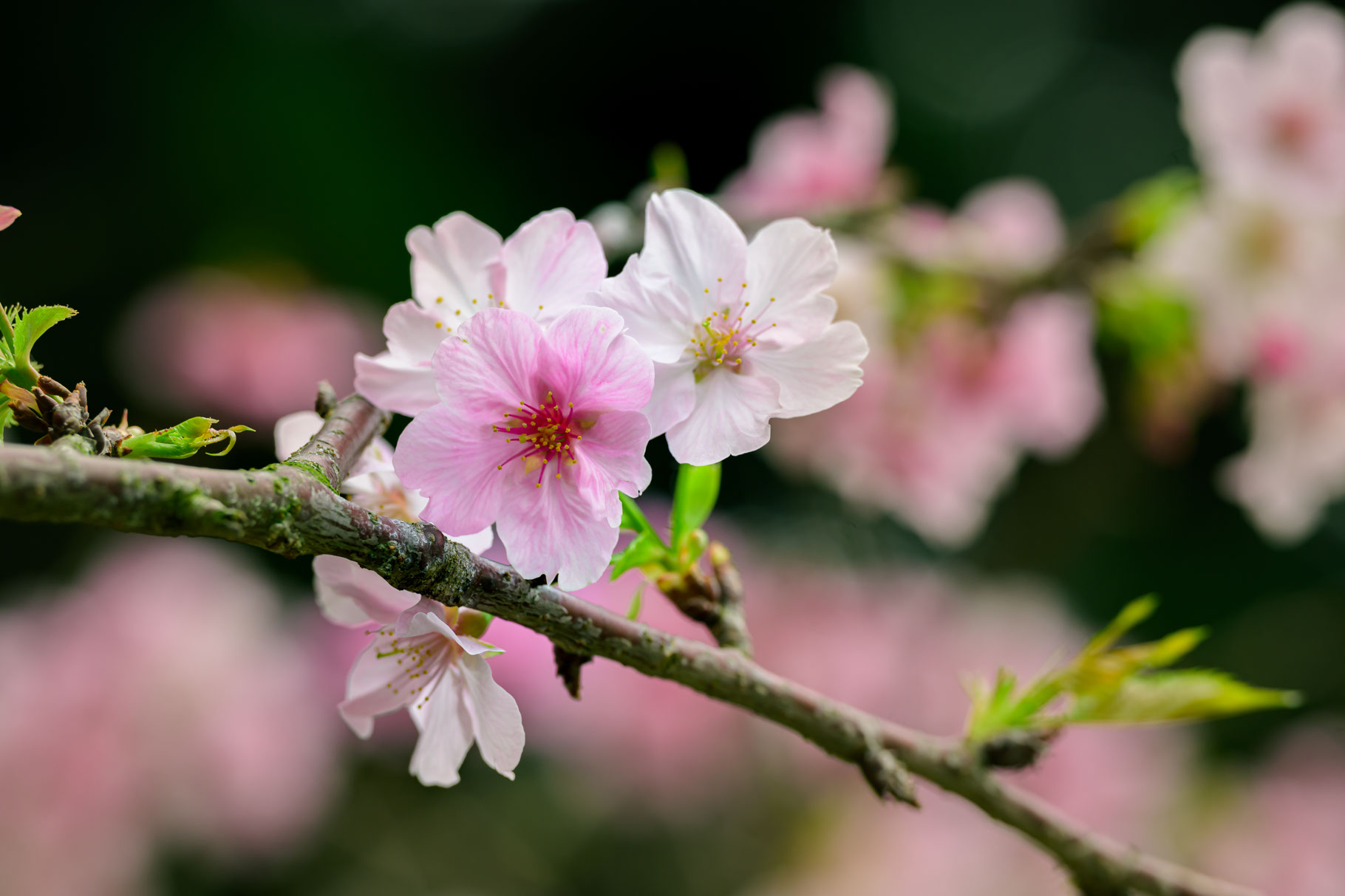
These Prunus × kanzakura trees are a cultivated hybrid originating in Japan that reveal their five, notched petals of white and pink at the very tail end of winter, earlier than most cherry blossoms and well ahead of the wild varieties. The behavior of this species required the intervening hand of humans and disconnected the trees from their ancestor’s dependency on the natural cycles of pollinating insects. However, the result is an extension to the broader cherry blossom season and that much more opportunity for appreciation and enjoyment to those fortunate enough to spend an afternoon taking in the beauty of these flowers. A teasing glimpse of the approaching wonders of spring renewal made available when sun-starved spirits may need it most.
This variety may be found in many gardens around the world, but the flowers in this photo graced our world for a brief week in early March, 2024 in the Japanese Cherry Blossom Area of the CKS Memorial Hall grounds in Taipei, Taiwan, borne by trees donated by the Japan-China Friendship Association in 2005. And then, as all blossoms do, they returned to the earth in their next stop along the cycle of death and rebirth, to contribute in their small and delicate way to the nutrients of the soil sustaining the tree so it can bloom again the following year.