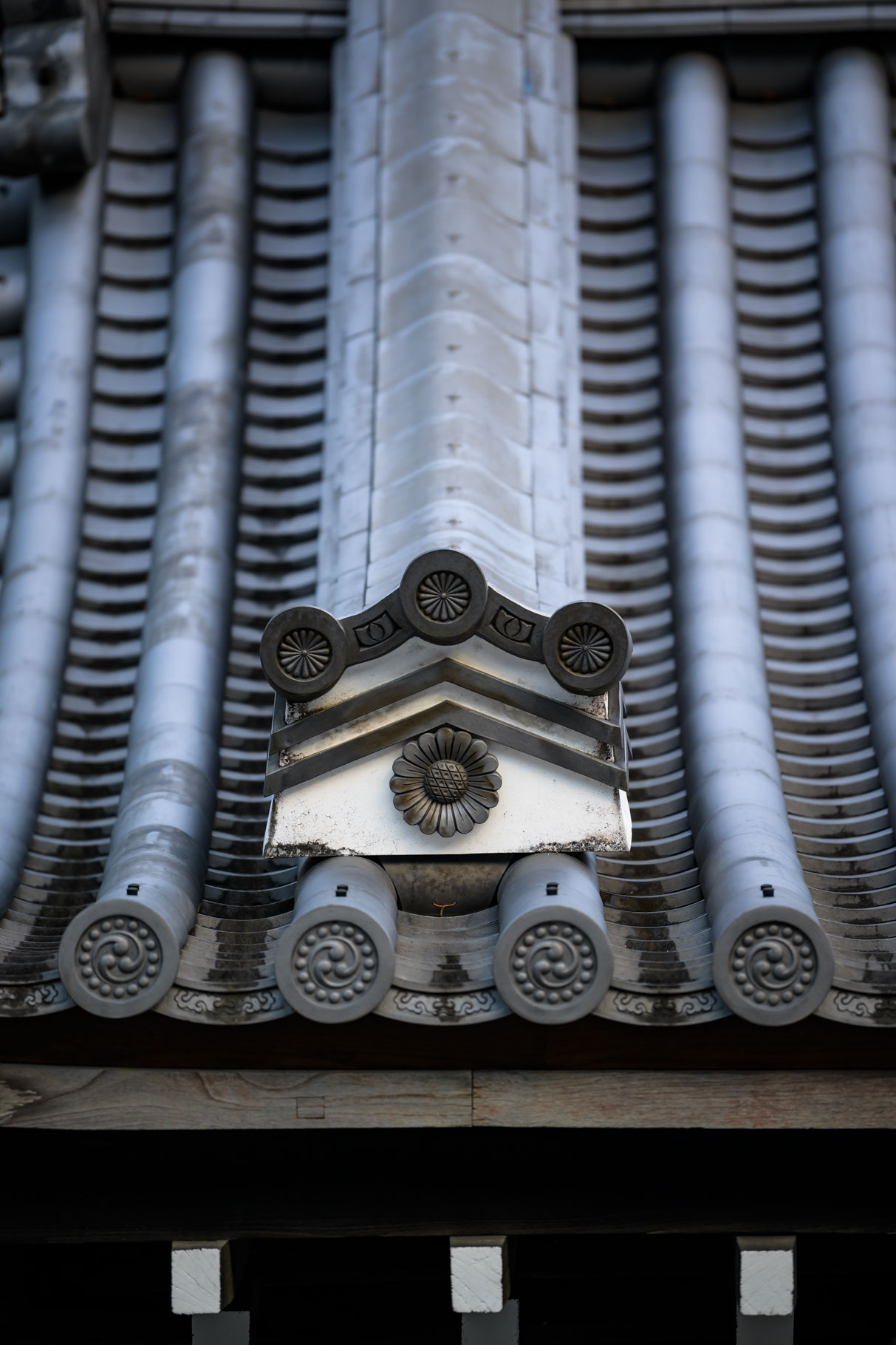
In Giacomo Puccini’s Crisantemi for string quartet, he immortalizes his lament at the passing of his friend Prince Amadeo, Duke of Savoy[1]. The eponymous flower’s late Fall blossoming coincides with celebrations such as All Souls’ Day (Italian, Giorno dei Morti) and the Day of the Dead (Spanish, Día de los Muertos) among others and has made them an historically popular flower to offer at graves and remembrances for the deceased in many cultures.
In Japan, though, the flower also represents endurance and longevity, its hardiness through the winter months key to its renewal and blossoming once again every year in the waning months of Fall. Festivals celebrate the autumnal blooms, and the flower has become a central component of the imperial family’s and the nation’s identities.
But perhaps there is still something of the old capital in a city that would keep the streetcar running so long. Naturally, the streetcar itself was small; one’s knees almost touched those of the passenger sitting opposite.
Now that the streetcar was to be dismantled, however, it seemed that everyone hated to part with it. People decorated it with artificial flowers, calling it the “flower train.” The streetcar was advertised with passengers dressed in the fashion of the Meiji Period. Would this be another Kyoto festival?
The streetcar continued to run for many days with full loads of passengers who had no particular reason for riding.[2]
And so it should be no surprise that among the decorative end caps, or gatō, on traditionally tiled roofs around the old capital city of Kyoto, whether palaces or shrines, there are countless chrysanthemums to be found. A city that has endured for centuries through change and loss and progress and war and regrowth[3].
Stowell, Robin, editor. The Cambridge Companion to the String Quartet. Cambridge University Press, 2003. ↩︎
Kawabata, Yasunari. The Old Capital. Translated by J. Martin Holman, Counterpoint, 2006. ↩︎
Stavros, Matthew. Kyoto: An Urban History of Japan’s Premodern Capital. University of Hawaii Press, 2016. ↩︎